Air Fryer Recipes for Beginners: What to Make First (20 Easy Wins)
20 air fryer recipes in the order to cook them, from foolproof frozen chips to crispy wings, plus the rules that fix most beginner problems.
schedule 7 min readcalendar_today July 9, 2026restaurant Air Fryerperson claire
Most air fryers spend their first two months in the box. The problem is rarely the appliance — it is that nobody tells you what to cook first, so you keep meaning to look it up and keep not doing it.
This is the order to go in. Twenty recipes, starting with the ones that are almost impossible to get wrong and ending with the ones worth owning the machine for, plus the handful of rules that separate crispy from disappointing.
What an Air Fryer Actually Is
It is a small convection oven with an aggressive fan and a basket that lets hot air hit food from every side. Nothing is fried. What you get is very fast, very dry heat — which is exactly what browning and crisping need.
Two consequences follow, and they explain nearly every beginner failure:
It cooks faster and hotter than your oven. Start checking a few minutes before any oven recipe tells you to. Roughly, drop the oven temperature by about 20°C and cut the time by around a fifth, then check early anyway.
Air has to reach the food. A crowded basket steams. This is the single most common mistake, and it is why someone’s first batch of vegetables comes out soggy and they never try again.
Week One: 6 Recipes You Cannot Get Wrong
Frozen chips. The correct first thing to cook. No oil needed beyond what is already on them. Shake the basket halfway. 200°C, 15–18 minutes.
Frozen chicken nuggets or tenders. Genuinely better than the oven and far better than the microwave. Texture lands close to fresh-fried.
Bacon. No splatter, no standing over a pan. Lay strips flat without overlapping. Check at eight minutes — thickness varies enormously by brand.
Baked potatoes. Pierce a few times, rub with oil and salt, 200°C for 35–40 minutes. Crispier skin than an oven and faster.
Reheated pizza. Three or four minutes and the base is crisp again. This alone converts sceptics.
Frozen spring rolls or samosas. Straight from frozen, no oil, no defrosting.
Notice the pattern: everything above is already coated in fat and designed for dry heat. That is why they work with no technique at all.
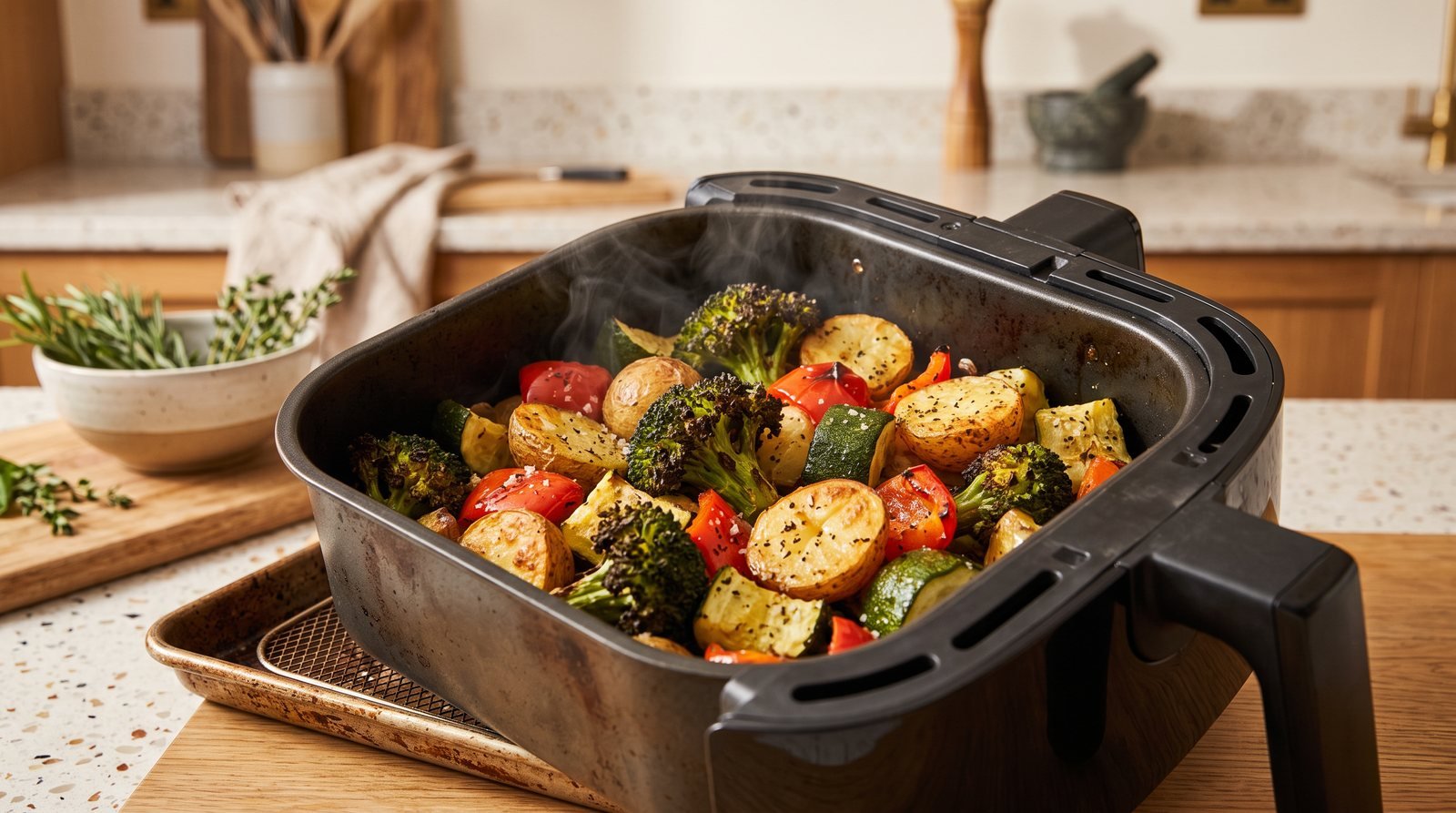
A single layer with gaps between pieces. Crowd the basket and vegetables steam instead of crisping.
Week Two: 7 Fresh-Ingredient Recipes
Roasted vegetables. Broccoli, peppers, courgette, red onion. Cut to a similar size, toss in a little oil, single layer, 190°C for 12–15 minutes. Broccoli in particular is transformed.
Chicken thighs. Skin-on, bone-in, 190°C for 22–25 minutes. The skin gets genuinely crisp. Forgiving of timing in a way breasts are not.
Roasted chickpeas. Drain, rinse, and pat completely dry — wet chickpeas steam and stay soft. 190°C, 12–15 minutes, seasoned after cooking.
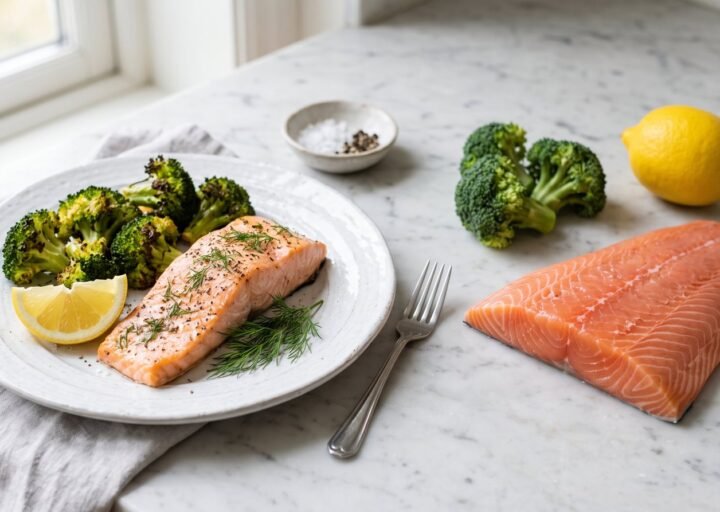
Salmon fillets. Eight to ten minutes at 190°C. Almost impossible to overcook in that window, and no fish smell through the house.
Halloumi. Sliced thick, no oil needed, six to eight minutes. Golden outside, squeaky inside.
Whole small potatoes. Parboil for six minutes, rough them up in the colander, then air fry at 200°C. This is how you get roast-potato texture on a weeknight.
Sausages. 180°C, 12–15 minutes, turned once. No pan, no splatter, no oil.
Week Three: 7 Recipes Worth Owning It For
Crispy chicken katsu. Panko-crumbed chicken with a light oil spray. The closest an air fryer gets to genuine deep-frying.
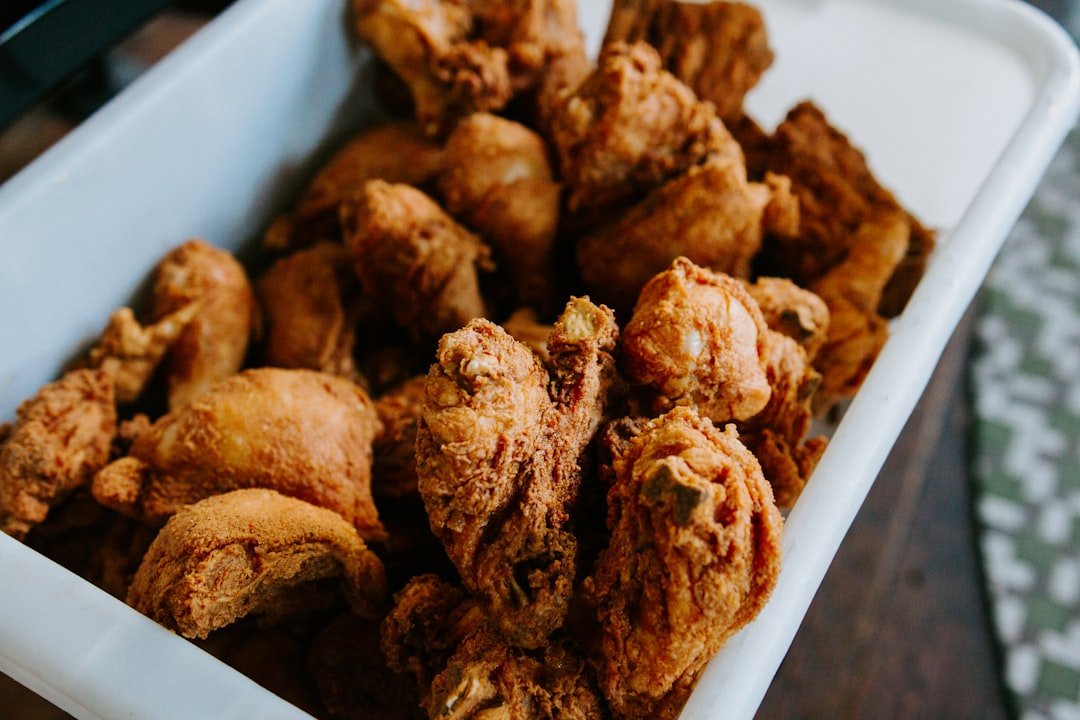
Air fryer wings. Dry the skin thoroughly, dust with a little baking powder and salt, 200°C for 20–24 minutes, turning once. Better than most pub wings.
Stuffed peppers. Halved, filled with rice, beans and cheese, 180°C for 12 minutes.
Air fryer falafel. Holds together better than pan-fried and uses a fraction of the oil.
Garlic bread from a baguette. Four minutes. Better crust than the oven.
Cinnamon-sugar doughnut bites. Tinned biscuit dough or shop-bought dough, six minutes, tossed in butter and cinnamon sugar while hot.
Roasted grapes or peaches. Ten minutes and they collapse into something worth spooning over yoghurt or ice cream.
Five Rules That Fix Most Problems
Single layer, always. If pieces overlap, cook in two batches. The second batch takes less time because the machine is already hot.
Dry the food. Surface moisture has to evaporate before browning starts. Patting chickpeas, chicken skin or vegetables dry is the highest-return thirty seconds in air frying.
A little oil, not none. Fresh vegetables and lean proteins need a light coating or they dehydrate rather than crisp. A spray bottle is worth the few pounds.
Shake or turn halfway. The fan is strong but not omnidirectional. Anything sitting still browns on one side only.
Preheat for anything you want crisp. Three minutes. Skip it for frozen food, do it for chicken skin and potatoes.
What Not to Put In One
Wet batter. It drips through the basket and bakes onto the element. Breadcrumbs work; batter does not.
Loose light leaves. Spinach and rocket get blown around by the fan and burn against the element.
Anything needing liquid. Rice, pasta, stews and soups belong on the hob. An air fryer is dry heat only.
Very fatty cuts without a base layer. Rendered fat pooling under the element causes smoke. A slice of bread underneath absorbs it.
Frozen chips. They need no oil, no preparation and no judgement, and they show you how your particular machine behaves. Then move to bacon and roasted vegetables.
Do I need to use oil in an air fryer?
Not for already-oiled frozen food. For fresh vegetables, lean chicken and anything you want to brown, a light spray is necessary — without it food dries out rather than crisping.
How do I convert an oven recipe for the air fryer?
Drop the temperature by roughly 20°C and cut the time by about a fifth, then check early. Because air fryers vary a lot, treat that as a starting point rather than a formula.
Why is my air fryer food soggy?
Almost always overcrowding. Food packed tightly traps steam, and steam is the opposite of what you want. Cook in two batches instead, and make sure the food was dry going in.
Can you put foil or baking paper in an air fryer?
Yes, but only weighed down by food and never covering the whole base — the machine needs airflow underneath. Loose paper can be blown into the element.
How do I clean the basket?
Most baskets are dishwasher safe. For stuck-on residue, soak in warm soapy water and use a non-abrasive sponge — scouring pads destroy the non-stick coating. Wipe the element occasionally once the machine is cold.
Is an air fryer actually healthier?
It uses far less oil than deep-frying, so if it replaces a deep fat fryer the difference is real. Compared with a conventional oven the nutritional difference is small — the genuine advantages are speed, texture and not heating the whole kitchen.
Take It Out of the Box Tonight
Cook the frozen chips. That is the entire onboarding process. Once you have seen how fast it gets to temperature and how crisp things come out, the rest of this list stops looking like a project and starts looking like dinner.
 visibility60+
 visibility120+
 visibility420+